
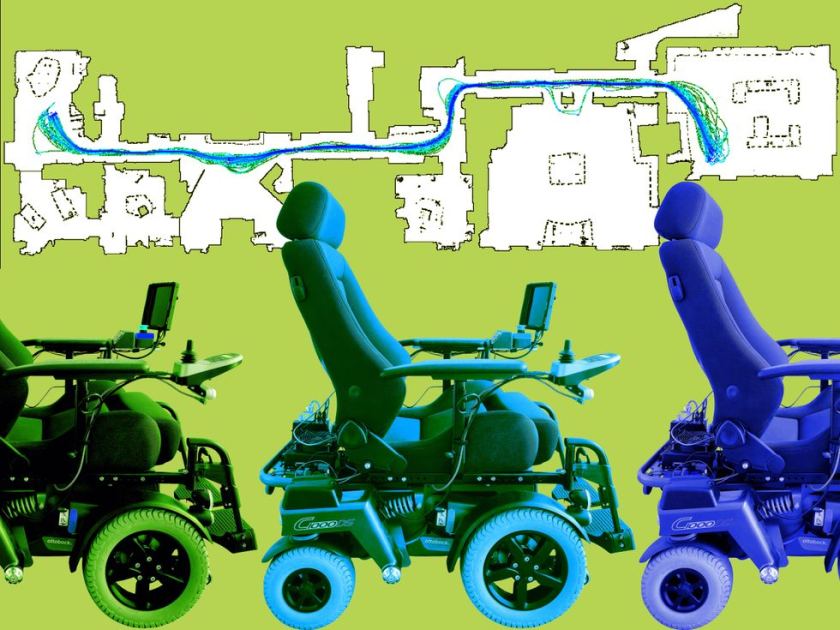
Wheelchair users with severe disabilities can often navigate tight spaces better than most robotic systems can. A wave of new smart-wheelchair research, including findings presented in Anaheim, Calif., earlier this month, is now testing whether AI-powered systems can, or should, fully close this gap.Christian Mandel—senior researcher at the German Research Center for Artificial Intelligence (DFKI) in Bremen, Germany—co-led a research team together with his colleague Serge Autexier that developed prototype sensor-equipped electric wheelchairs designed to navigate a roomful of potential obstacles. The researchers also tested a new safety system that integrated sensor data from the wheelchair and from sensors in the room, including from drone-based color and depth cameras.Mandel says the team’s smart wheelchairs were both semiautonomous and autonomous.“Semiautonomous is the shared control system where the person sitting in the wheelchair uses the joystick to drive,” Mandel says
UPVOTERS
Community appreciation
See who found this content valuable and showed their support.
TOPICS
Explore the same topics
Discover more content from the topics this post is mapped to.
Keep browsing
Explore more from this topic
Dive into the full feed of curated posts covering Robotics & Automation.
Discussion
Jump in and comment!
Get the ball rolling with your comment!