
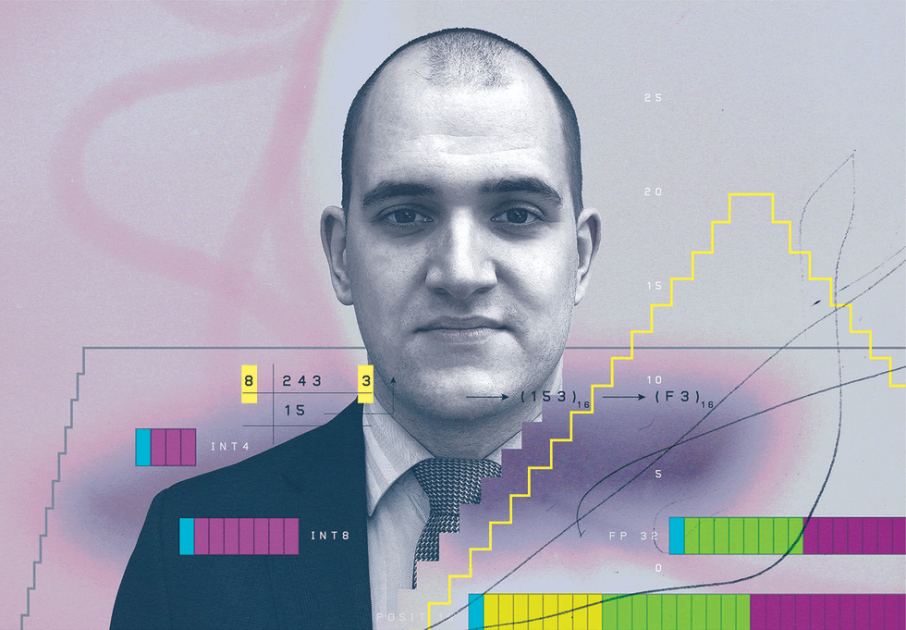
AI has driven an explosion of new number formats—the ways in which numbers are represented digitally. Engineers are looking at every possible way to save computation time and energy, including shortening the number of bits used to represent data. But what works for AI doesn’t necessarily work for scientific computing, be it for computational physics, biology, fluid dynamics, or engineering simulations. IEEE Spectrum spoke with Laslo Hunhold, who recently joined Barcelona-based Openchip as an AI engineer, about his efforts to develop a bespoke number format for scientific computing.LASLO HUNHOLDLaslo Hunhold is a senior AI accelerator engineer at Barcelona-based startup Openchip. He recently completed a Ph.D. in computer science from the University of Cologne, in Germany.What makes number formats interesting to you?Laslo Hunhold: I don’t know another example of a field that so few are interested in but has such a high impact. If you make a number format that’s 10 percent more [
UPVOTERS
Community appreciation
See who found this content valuable and showed their support.
No upvotes yet.
Be the first to show your appreciation for this content.
TOPICS
Explore the same topics
Discover more content from the topics this post is mapped to.
Keep browsing
Explore more from this topic
Dive into the full feed of curated posts covering Robotics & Automation.
Discussion
Break the silence
Take the opportunity to kick things off.