
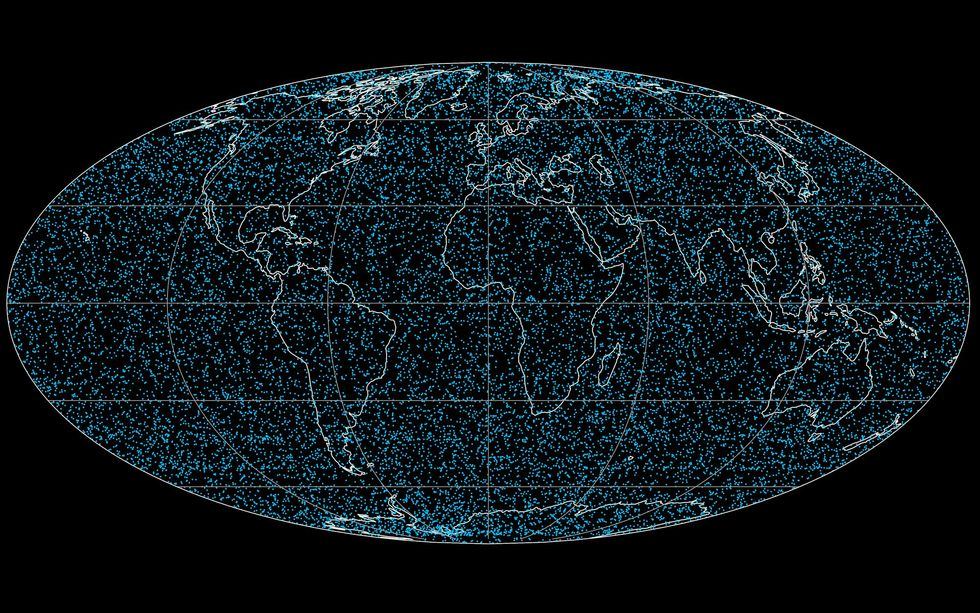
Thousands of satellites are tightly packed into low Earth orbit, and the overcrowding is only growing. Scientists have created a simple warning system called the CRASH Clock that answers a basic question: if satellites suddenly couldn’t steer around each other, how much time would elapse before there was a crash in orbit? Their current answer: 5.5 days. The CRASH Clock metric was introduced in a paper orginally published on the Arxiv physics preprint server in December, and is currently under consideration for publication. The team’s research measures how quickly a catastrophic collision could occur if satellite operators lost the ability to maneuver—whether due to a solar storm, a software failure, or some other catastrophic failure.To be clear, say the CRASH Clock scientists, low Earth orbit is not about to become a new realm of collisions that’s about to become unusable. But what they have shown, consistent with recent research and public outcry, is that low Earth orbit’s
UPVOTERS
Community appreciation
See who found this content valuable and showed their support.
TOPICS
Explore the same topics
Discover more content from the topics this post is mapped to.
Keep browsing
Explore more from this topic
Dive into the full feed of curated posts covering Robotics & Automation.
Discussion
Get the discussion rolling
A single comment can start something great.