
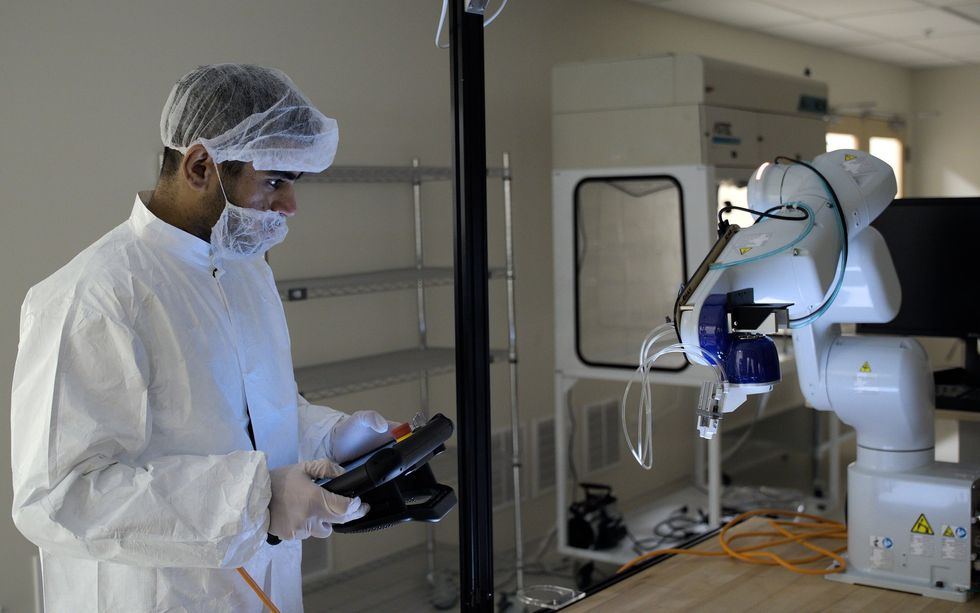
Innovation rarely happens in isolation. Usually, the systems that engineers design are shaped by global teams whose members’ knowledge and ideas move across borders as easily as data.That is especially true in my field of robotics and automation—where hardware, software, and human workflows function together. Progress depends not only on technical skill but also on how engineers frame problems and evaluate trade-offs. My career has shown me how cross-cultural experiences can shape the framing.Working across different cultures has influenced how I approach collaboration, design decisions, and risk. I am an IEEE member and a mechanical engineer at Re:Build Fikst, in Wilmington, Mass., but I grew up in India and began my engineering education there.Experiencing both work environments has reinforced the idea that diversity in science, technology, engineering, and mathematics fields is not only about representation; it is a technical advantage that affects how systems are designed and
UPVOTERS
Community appreciation
See who found this content valuable and showed their support.
No upvotes yet.
Be the first to show your appreciation for this content.
TOPICS
Explore the same topics
Discover more content from the topics this post is mapped to.
Keep browsing
Explore more from this topic
Dive into the full feed of curated posts covering Robotics & Automation.
Discussion
Start the conversation
Your voice can be the first to spark an engaging conversation.