
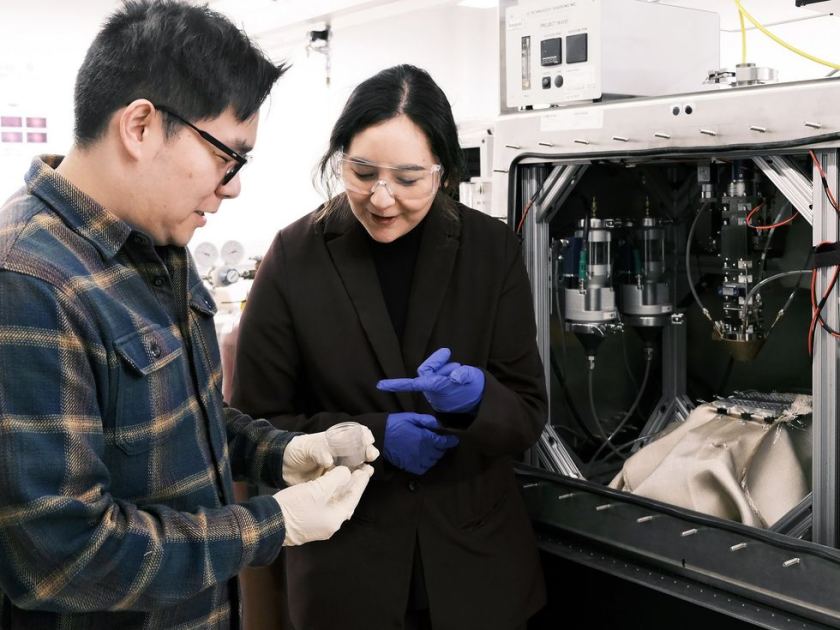
Through the Artemis Program, NASA hopes to establish a permanent human presence on the Moon in its southern polar region. China, Russia, and the European Space Agency (ESA) have similar plans, all of which involve building bases near the permanently shadowed regions (PSRs)—craters that contain water ice—that dot the South Pole-Aitken Basin. For these and other agencies, it is vital that these bases be as self-sufficient as possible since resupply missions cannot be launched regularly and take several days to arrive. Therefore, any plan for a lunar base must come down to harvesting local resources to meet the needs of its crews as much as possible—a process known as In-Situ Resource Utilization (ISRU). In a recent study, researchers at The Ohio State University (OSU) proposed using a specialized laser-based 3D printing method to turn lunar regolith into hardened building material. According to their findings, this method can produce durable structures that withstand radiation
UPVOTERS
Community appreciation
See who found this content valuable and showed their support.
TOPICS
Explore the same topics
Discover more content from the topics this post is mapped to.
Keep browsing
Explore more from this topic
Dive into the full feed of curated posts covering Robotics & Automation.
Discussion
Break the silence
Take the opportunity to kick things off.