
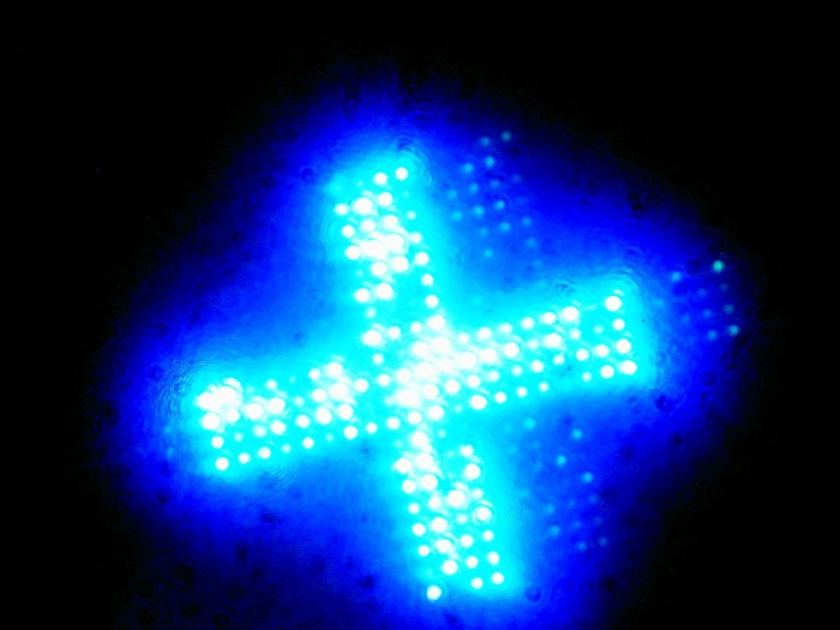
MicroLEDs, with pixels just micrometers across, have long been a byword in the display world. Now, microLED-makers have begun shrinking their creations into the uncharted nano realm. In January, a startup named Polar Light Technologies unveiled prototype blue LEDs less than 500 nanometers across. This raises a tempting question: How far can LEDs shrink?We know the answer is, at least, considerably smaller. In the past year, two different research groups have demonstrated LED pixels at sizes of 100 nm or less.These are some of the smallest LEDs ever created. They leave much to be desired in their efficiency—but one day, nanoLEDs could power ultra-high-resolution virtual reality displays and high-bandwidth on-chip photonics. And the key to making even tinier LEDs, if these early attempts are any precedents, may be to make more unusual LEDs.New Approaches to LEDTake Polar Light’s example. Like many LEDs, the Sweden-based startup’s diodes are fashioned from III-V semiconductors like
UPVOTERS
Community appreciation
See who found this content valuable and showed their support.
No upvotes yet.
Be the first to show your appreciation for this content.
TOPICS
Explore the same topics
Discover more content from the topics this post is mapped to.
Keep browsing
Explore more from this topic
Dive into the full feed of curated posts covering Robotics & Automation.
Discussion
Be the first to comment
Add your perspective to get the discussion started.