
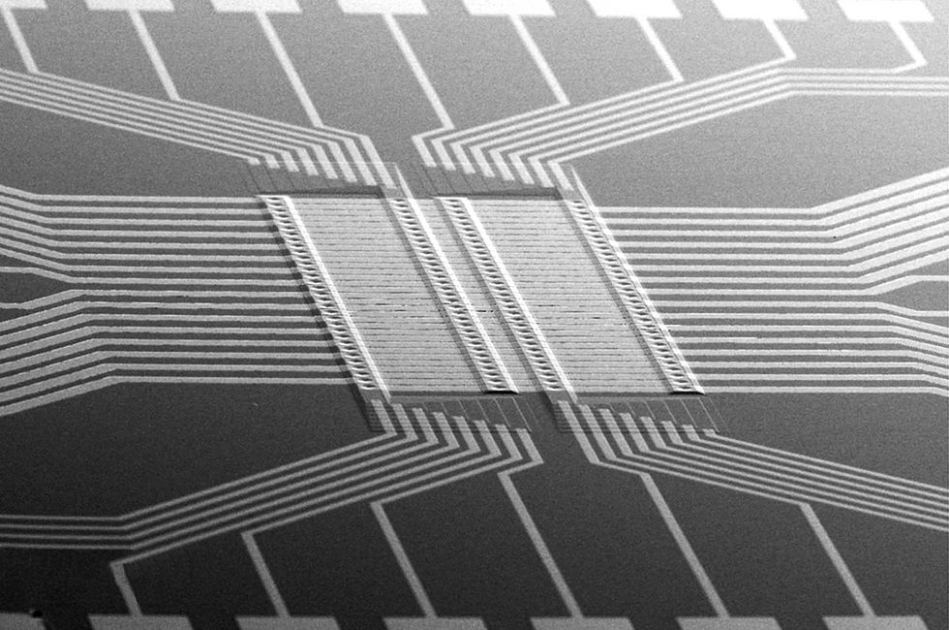
The hunt is on for anything that can surmount AI’s perennial memory wall–even quick models are bogged down by the time and energy needed to carry data between processor and memory. Resistive RAM (RRAM)could circumvent the wall by allowing computation to happen in the memory itself. Unfortunately, most types of this nonvolatile memory are too unstable and unwieldy for that purpose.Fortunately, a potential solution may be at hand. At December’s IEEE International Electron Device Meeting (IEDM), researchers from the University of California, San Diego showed they could run a learning algorithm on an entirely new type of RRAM.“We actually redesigned RRAM, completely rethinking the way it switches,” says Duygu Kuzum, an electrical engineer at the University of California, San Diego, who led the work.RRAM stores data as a level of resistance to the flow of current. The key digital operation in a neural network—multiplying arrays of numbers and then summing the results—can be d
UPVOTERS
Community appreciation
See who found this content valuable and showed their support.
No upvotes yet.
Be the first to show your appreciation for this content.
TOPICS
Explore the same topics
Discover more content from the topics this post is mapped to.
Keep browsing
Explore more from this topic
Dive into the full feed of curated posts covering Robotics & Automation.
Discussion
Leave the first comment
Be the first to leave a mark on this discussion.