
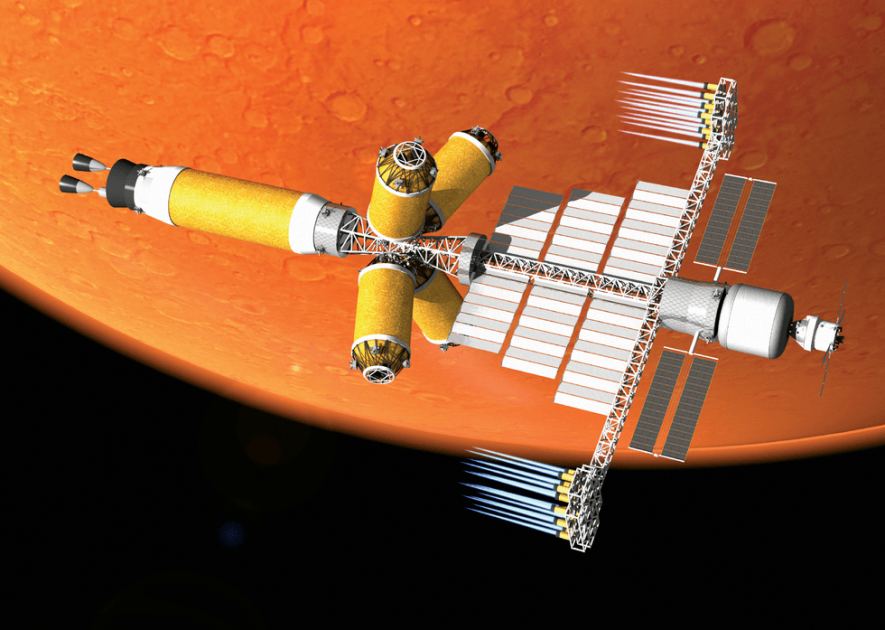
The biggest threat to any crewed expedition to Mars is time. NASA’s shortest blueprint for sending people to the Red Planet and back requires spending 620 days in space and 30 days on Mars. Even setting aside the compounding challenges of building life-support systems that can operate without resupply for that long, or the fact that longer journeys leave more time for unlucky accidents, life in microgravity and solar and cosmic radiation will inexorably exact their cumulative toll on human bodies.We want to make it possible to dramatically reduce the length of time crews must spend in space—down to just 335 days in transit or less. This will both simplify many engineering challenges and keep astronauts healthier and safer. We believe the key to this time reduction is a new approach to building a holy grail of space exploration, the bimodal nuclear rocket. In the 1960s, U.S. open-air ground tests demonstrated much of the technology needed for nuclear thermal rockets as part of the
UPVOTERS
Community appreciation
See who found this content valuable and showed their support.
No upvotes yet.
Be the first to show your appreciation for this content.
TOPICS
Explore the same topics
Discover more content from the topics this post is mapped to.
Keep browsing
Explore more from this topic
Dive into the full feed of curated posts covering Robotics & Automation.
Discussion
Break the silence
Take the opportunity to kick things off.