
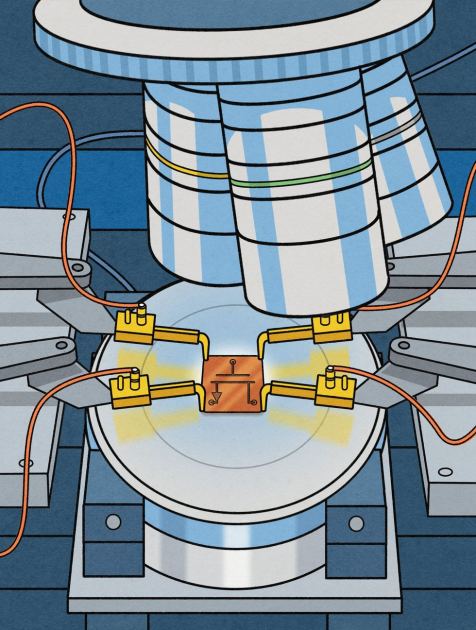
Today, you probably asked a question of a large language model, or accepted a connection suggestion on LinkedIn, or watched a recommended video on YouTube, or took a different route to work based on a traffic prediction from Google Maps. In other words, you probably used artificial intelligence. But what you might not know is how much energy that interaction consumed or why. AI requires processing massive amounts of data, which is usually done in large data centers populated by thousands of GPUs capable of executing up to trillions of operations per second. But each of those GPUs achieves that by consuming as much as 1,000 watts apiece. For comparison, if you’ve got a newer smartphone, it probably uses less than 1 W. That kilowatt figure puts GPUs on the same level as vacuum cleaners, dishwashers, and stoves, but with the big difference that data-center processors are operating uninterrupted around the clock.Fundamentally, a lot of this inefficiency is because GPUs are trying to sim
UPVOTERS
Community appreciation
See who found this content valuable and showed their support.
No upvotes yet.
Be the first to show your appreciation for this content.
TOPICS
Explore the same topics
Discover more content from the topics this post is mapped to.
Keep browsing
Explore more from this topic
Dive into the full feed of curated posts covering Robotics & Automation.
Discussion
Begin the discussion
Begin something meaningful by sharing your ideas.