
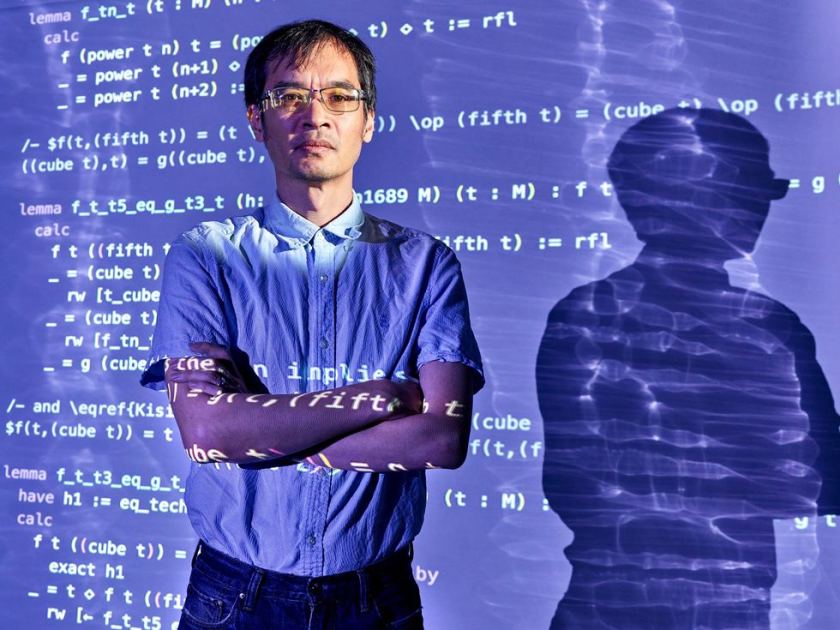
In the mid-noughties, when music by the Killers and Franz Ferdinand blared out of every pub and nightclub I passed, I spent my days and nights struggling through a Ph.D. in applied mathematics. My research focused on simulating how special light waves interact in liquid crystals and using simple equations to approximate and understand those interactions. When I look back at my thesis now, liquid crystal technology is old hat, and I imagine my work could be completed with AI assistance in a matter of days—maybe hours.But the same cannot be said for the work of the pure mathematics Ph.D. students with whom I shared a cramped office at the University of Edinburgh. At the time, I felt sorry for these colleagues, who day after day sat at their desks, seemingly tearing their hair out and making no progress. (Though I was struggling too, I was at least always making some headway.) When we finished and went our separate ways, some hadn’t even published a paper.Now, in hindsight, I finally
UPVOTERS
Community appreciation
See who found this content valuable and showed their support.
No upvotes yet.
Be the first to show your appreciation for this content.
TOPICS
Explore the same topics
Discover more content from the topics this post is mapped to.
Keep browsing
Explore more from this topic
Dive into the full feed of curated posts covering Robotics & Automation.
Discussion
Say something first
It all starts with you—share your thoughts now.